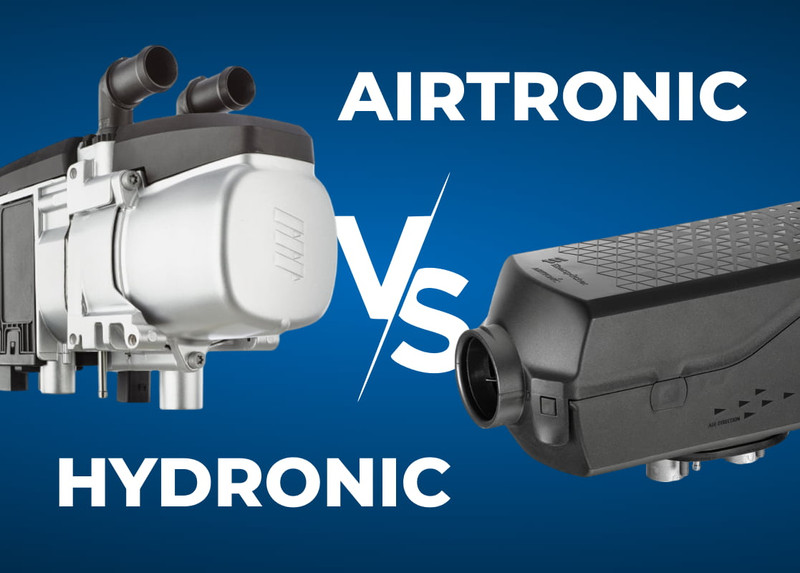
Espar Hydronic vs Airtronic: Key Differences Explained
Posted by [email protected] on 26th Jun 2026
Choosing between an Espar / Eberspächer Hydronic heater and an Airtronic heater usually comes down to one question: do you only need warm air in the cabin, or do you want a more integrated heating system that can also support coolant-based heat, engine preheating, and hot water when the right components are included?
Many customers know the brand as Espar, while Eberspächer is the real manufacturer name.
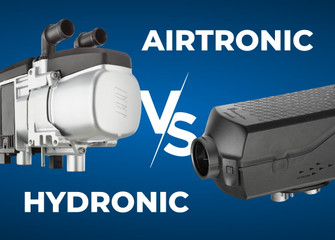
Airtronic heaters warm air directly and send it into the cabin through ducting. Hydronic heaters warm a coolant loop, which can then transfer heat through a vehicle heat exchanger, fan coil, radiator, or properly designed hot water system.
Both systems can be excellent choices for vans, RVs, trucks, boats, commercial vehicles, and off-grid builds. The right one depends on how you want to use the heat, how complex your installation can be, and whether you need cabin heat only or a more complete heating system.
What Is an Eberspacher Airtronic Heater?
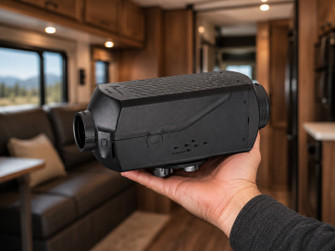
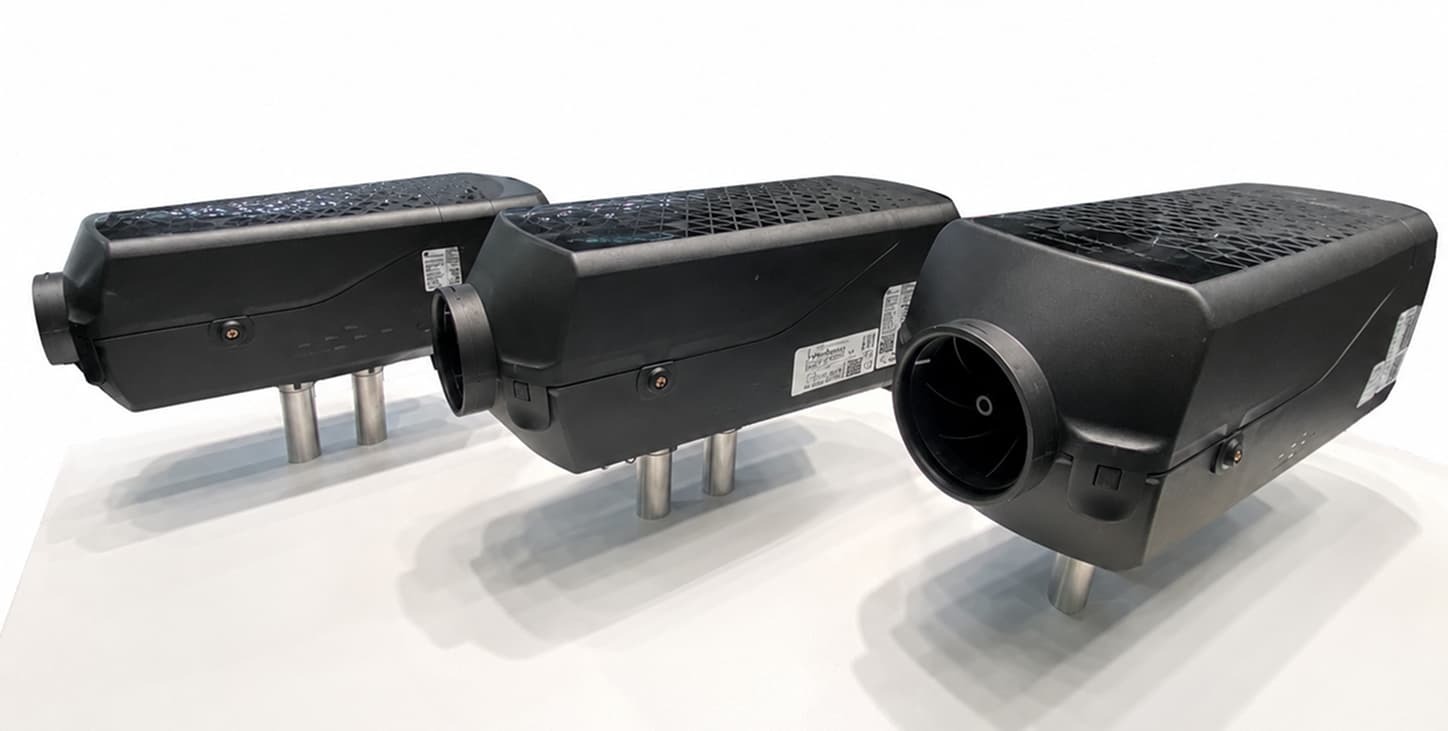
An Eberspacher Airtronic heater is a fuel-fired air heater. It burns diesel or gasoline, transfers heat through a heat exchanger, and uses a fan to move warm air into the living space, sleeper cab, cabin, or work area.
For many builds, an Airtronic heater is the most direct way to add reliable cabin heat. It does not need a coolant loop, radiators, or a hot water tank. The core installation usually includes the heater, fuel pickup, metering pump, exhaust, combustion air intake, wiring, controller, and hot air ducting.
That makes Airtronic heaters especially popular for vans, truck sleeper cabs, small RVs, boats with simple cabin-heating needs, work trucks, utility vehicles, and off-grid cabins where direct warm air is the main goal.
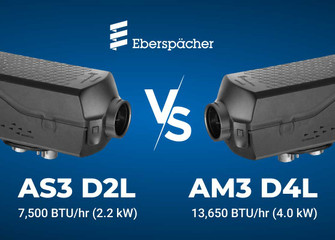
For diesel builds, start with our Espar Airtronic AS3 D2L Diesel 12V Heater Kit with EasyStart Pro Controller. For compatible commercial, truck, fleet, and equipment applications, we also offer the Espar Airtronic AS3 D2L Diesel 24V Heater Kit.
For gasoline builds, choose the Espar Airtronic S3 B2L Gasoline 12V Heater Kit with EasyStart Pro Controller. It is the better match for gasoline vans, RVs, and campers where you want direct warm air without adding a separate diesel supply.
What Is an Eberspacher Hydronic Heater?
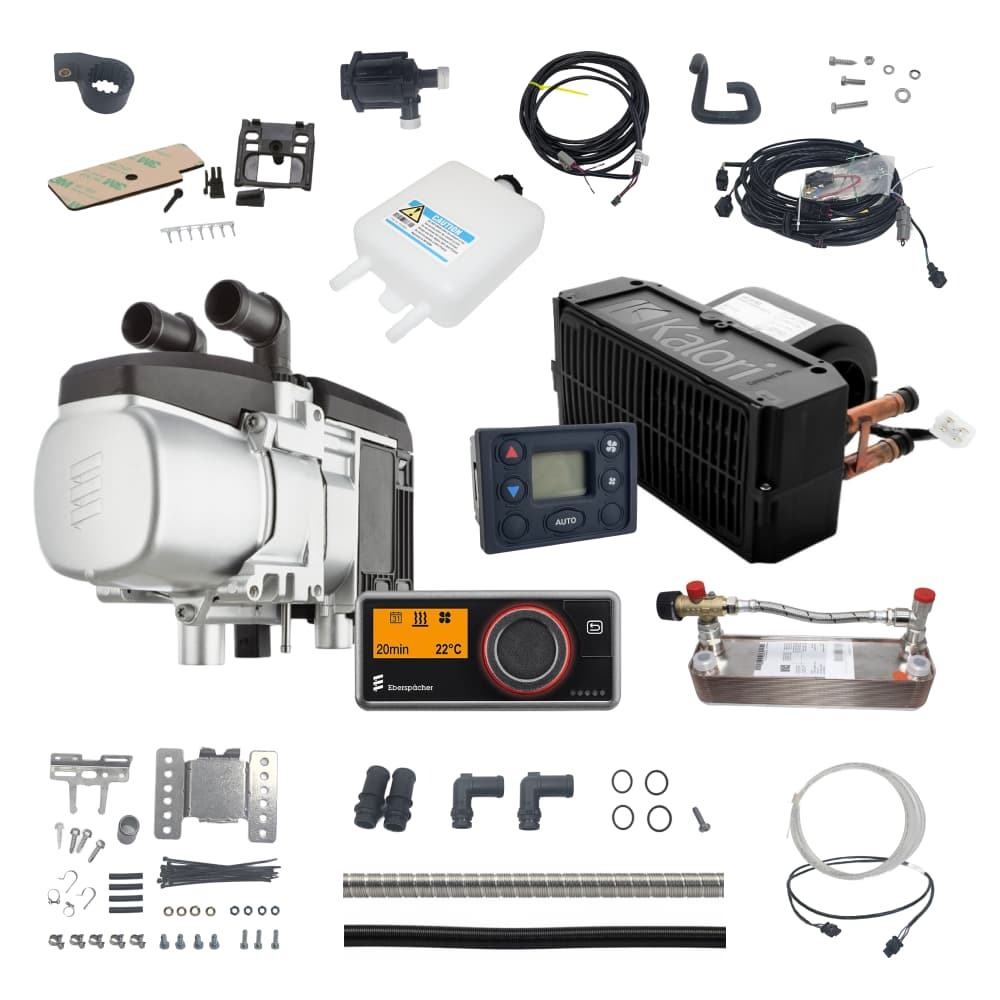
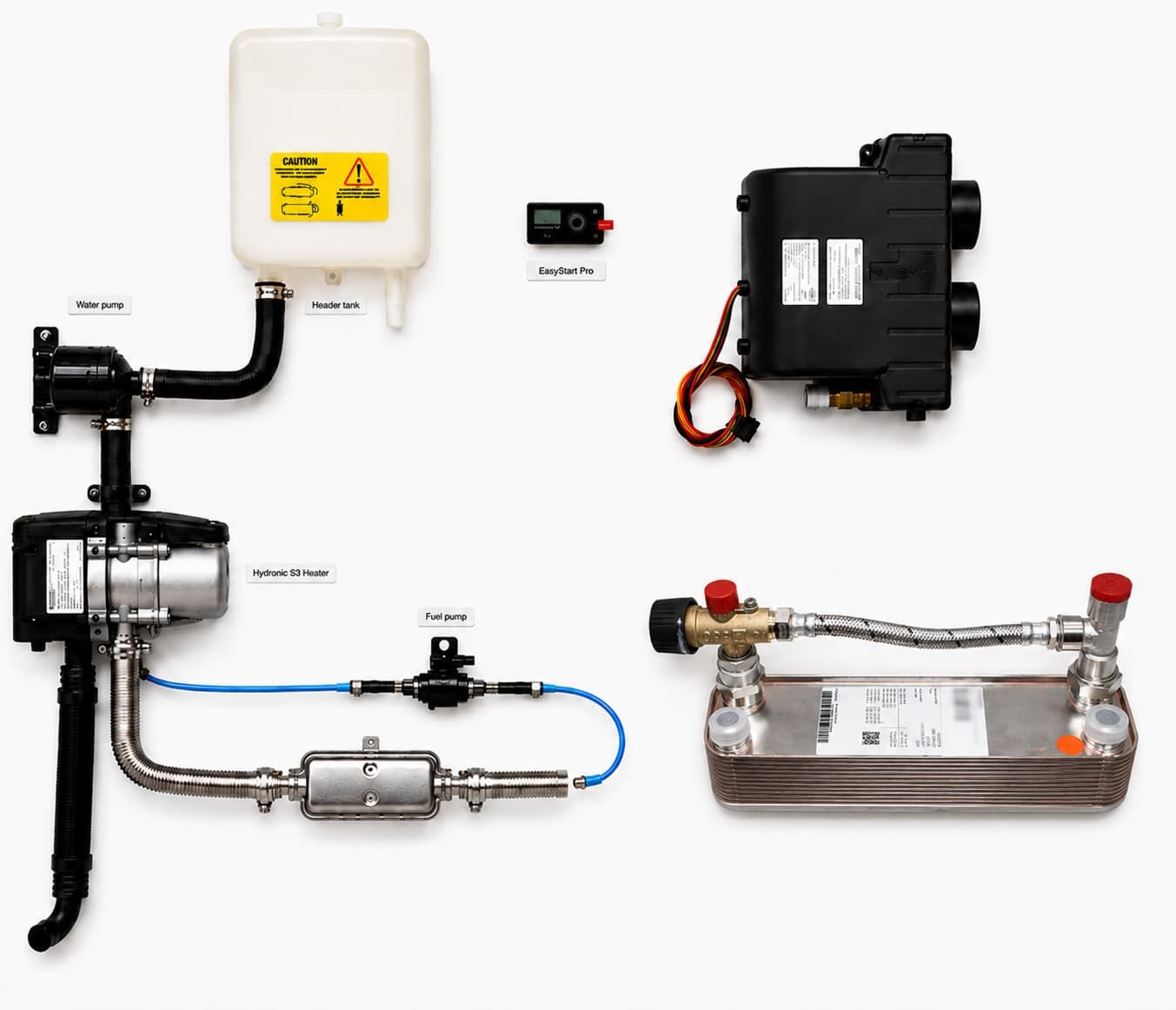
An Eberspacher Hydronic heater is a fuel-fired coolant heater. Instead of blowing warm air directly into the cabin, it heats a water and antifreeze mixture in a coolant loop. That heated coolant can then be routed through the right system components to provide cabin heat, engine preheating, or hot water support.
A Hydronic system may connect to a vehicle heat exchanger, fan coil, radiator, hot water tank, or marine/RV heat exchanger setup. This makes Hydronic heaters a strong choice for larger RVs and motorhomes, boats with multiple cabins, expedition vehicles, higher-end van builds, and commercial vehicles that need engine preheat.
For diesel RV and camper applications, start with our Espar / Eberspächer Hydronic S3 D5E 12V Diesel RV Heater Kit.
For gasoline RV and camper builds, choose the Espar / Eberspächer Hydronic S3 B5E 12V Gasoline/Petrol RV Camper Kit.
Espar Hydronic vs Airtronic: The Main Difference
The main difference is the heating medium.
An Airtronic heater heats air directly. A Hydronic heater heats coolant, and that coolant carries heat to other parts of the system.
| Feature | Eberspacher Airtronic | Eberspacher Hydronic |
|---|---|---|
| Heating method | Heats air directly | Heats coolant |
| Best for | Direct cabin heat | Integrated heating systems |
| Cabin warm-up | Usually faster | Depends on coolant loop and heat exchanger |
| Installation | Usually simpler | Usually more complex |
| Hot water support | No, not directly | Yes, with the right kit and plumbing |
| Engine preheat | No | Yes, in compatible coolant-loop layouts |
| Multi-zone heating | Limited | Better suited to multi-zone designs |
| Common use | Vans, trucks, small RVs, small boats | RVs, boats, expedition vehicles, commercial vehicles, trucks, construction machinery |
| Main components | Heater, ducting, fuel, exhaust, wiring | Heater, coolant lines, pump, heat exchangers, fuel, exhaust, wiring |
If your build only needs warm air, the Airtronic is usually the simpler answer. If your build needs hot water support, coolant-based heat distribution, engine preheating, or a more integrated comfort system, Hydronic becomes the stronger option.
Which Eberspacher Heater Heats the Cabin Faster?
For most cabin-heating applications, an Airtronic heater will usually feel faster.
That is because it heats air directly. Once the heater is running, warm air is moved into the space through ducting. There is no coolant loop that needs to warm up first.
A Hydronic system works differently. The heater must warm the coolant, the coolant must circulate, and then the heat must transfer into the cabin through a heat exchanger, radiator, fan coil, or similar component. This can still deliver strong, comfortable heat, but it is a more indirect process.
For a van, sleeper cab, or compact RV where the main goal is quick warm air, Airtronic is usually the more practical choice.
Which System Is Better for Hot Water?
Choose an Eberspacher Hydronic system if hot water is part of the build.
An Airtronic heater is designed for air heating. It can make a cabin comfortable, but it does not heat a coolant loop and does not directly support a hot water tank.
A Hydronic heater is different. Because it heats coolant, it can be designed into a system that transfers heat to a hot water tank or heat exchanger. The key is using the correct kit, heat exchanger, water tank, plumbing, controls, and safety setup.
Hydronic is usually the better path for camper van sink or shower support, RV hot water, marine domestic water, combined cabin heat and water heating, and coolant-loop integration.
Which Is Easier to Install?
An Airtronic heater is usually easier to install than a Hydronic heater.
An Airtronic installation typically involves a fuel pickup or standpipe, fuel metering pump, exhaust routing, combustion air intake, power and ground wiring, controller wiring, warm air ducting, and startup testing.
Because Airtronic heaters rely on correct mounting, ducting, combustion air, exhaust, fuel supply, and wiring, installation details matter. Before starting or checking an air heater installation, use our Eberspacher Air Heater Installation Checklist alongside the official manual for your exact model.
A Hydronic installation may include all of those fuel, exhaust, combustion air, and electrical steps, plus a coolant system. That can add coolant hose routing, water pump mounting, coolant fill and bleed procedures, fan coils, heat exchangers, hot water integration, and more detailed system planning.
This does not mean Hydronic is the wrong choice. It means Hydronic should be selected when the added capability is worth the added installation complexity.
Which Is Better for Vans?
For most van conversions, an Espar Airtronic heater is the better fit if the main goal is simple cabin heat.
A van is usually a compact space. Direct warm air can heat it quickly, and the installation can be planned around one or more duct outlets. For many Sprinter, Transit, Promaster, and similar van builds, an Airtronic heater gives the right balance of comfort, efficiency, and installation simplicity.
Choose an Airtronic heater for a van if you mainly need cabin heat, want fewer system components, do not need engine preheat, do not need hydronic hot water integration, and want fast warm air on cold mornings.
Choose a Hydronic heater for a van if you want hot water support, heated floors, fan coils, engine preheat in a compatible layout, or a more integrated comfort system.
For most buyers, Airtronic is the practical starting point. Hydronic becomes more attractive when the build has a real need for coolant-based heating.
Which Is Better for RVs and Motorhomes?
For RVs and motorhomes, the right answer depends on size and system goals.
A smaller RV or truck camper may only need one or two zones of cabin heat. In that case, an Airtronic heater may be a simple and effective option.
A larger RV may benefit from a Hydronic system, especially if the goal is to combine cabin heat, hot water support, and multiple heat zones. Hydronic systems are often better suited to layouts where heat needs to move to different rooms or where a coolant loop can serve multiple heat exchangers.
Choose Airtronic for smaller RVs when direct warm air is enough. Choose Hydronic for larger or more integrated RV heating systems.
Which Is Better for Boats?
Boats can use either system, but the choice depends on vessel size, cabin layout, and hot water needs.
For smaller boats, an Eberspacher Airtronic heater can be a good fit when the goal is simple cabin heat. It can move warm air through ducting and is often easier to understand than a full coolant-based system.
For larger boats, Hydronic can be a better option. A coolant-based system can support multiple cabins, fan coils, radiators, and water-heating integration when designed correctly.
Marine installations also need careful attention to exhaust routing, combustion air, hull fittings, fuel system design, and moisture exposure. Follow the manufacturer installation manual for the exact heater model and use marine-rated installation components where required.
Maintenance Differences
Both Eberspacher Airtronic and Hydronic heaters need clean fuel, stable voltage, correct exhaust routing, proper combustion air supply, and regular operation.
Airtronic maintenance is generally more straightforward because the heating path is simpler. The main areas to check are ducting, air intake, exhaust, fuel supply, wiring, controller, and fault codes.
Hydronic systems require attention to those same fuel, exhaust, combustion air, and electrical areas, plus the coolant loop. That means checking for leaks, trapped air, coolant condition, water pump operation, antifreeze mix, hose routing, and heat exchanger performance.
If a Hydronic system has poor coolant flow, air in the loop, incorrect antifreeze mix, or a blocked heat exchanger, cabin heating performance can suffer even if the heater itself is working.
Recommended Espar / Eberspächer Products to Consider
If you want simple, direct cabin heat, start with an Eberspacher Airtronic air heater kit.
For diesel cabin heat, the Espar Airtronic AS3 D2L Diesel 12V Heater Kit with EasyStart Pro Controller is the main 12V Airtronic kit to consider. For 24V commercial, truck, fleet, and equipment applications, choose the Espar Airtronic AS3 D2L Diesel 24V Heater Kit.
For gasoline cabin heat, choose the Espar Airtronic S3 B2L Gasoline 12V Heater Kit with EasyStart Pro Controller.
If your build needs coolant-based heating, hot water support, engine preheat, or a more integrated comfort system, look at Eberspacher Hydronic heater kits instead.
For diesel Hydronic RV and camper systems, choose the Espar / Eberspächer Hydronic S3 D5E 12V Diesel RV Heater Kit.
For gasoline Hydronic RV and camper systems, choose the Espar / Eberspächer Hydronic S3 B5E 12V Gasoline/Petrol RV Camper Kit.
| If you need... | Consider... |
|---|---|
| Direct diesel cabin heat, 12V | Espar / Eberspächer Airtronic AS3 D2L Diesel 12V Heater Kit |
| Direct diesel cabin heat, 24V | Espar / Eberspächer Airtronic AS3 D2L Diesel 24V Heater Kit |
| Direct gasoline cabin heat, 12V | Espar / Eberspächer Airtronic S3 B2L Gasoline 12V Heater Kit |
| Diesel Hydronic RV/camper heating | Espar / Eberspächer Hydronic S3 D5E 12V Diesel RV Heater Kit |
| Gasoline Hydronic RV/camper heating | Espar / Eberspächer Hydronic S3 B5E 12V Gasoline/Petrol RV Camper Kit |
Espar Hydronic vs Airtronic: Which Should You Choose?
Choose an Eberspacher Airtronic heater if you mainly need cabin heat. It is usually the more direct, simpler, and faster-feeling choice for vans, trucks, small RVs, sleeper cabs, and smaller boats.
Choose an Eberspacher Hydronic heater if you are building a more integrated system. Hydronic is the better fit when you need coolant-based heat distribution, hot water support, engine preheating, multiple heat zones, or a system that can serve more than one heating purpose.
| Choose Airtronic if... | Choose Hydronic if... |
|---|---|
| You mainly need cabin heat | You need cabin heat plus hot water support |
| You want a simpler installation | You are building a full heating system |
| You have a van, truck, or small RV | You have a larger RV, boat, or expedition vehicle |
| You want fast warm air | You want coolant-based heat distribution |
| You want fewer components | You are comfortable with coolant plumbing |
| You do not need engine preheat | You want engine preheating capability |
The easiest way to decide is to start with your end use. If the heater’s job is to warm the living space, choose Airtronic. If the heater needs to feed a broader comfort system, choose Hydronic.
FAQs
What is the difference between Espar Hydronic and Airtronic heaters?
Espar Airtronic heaters heat air directly and blow warm air into the cabin through ducting. Espar Hydronic heaters heat a coolant loop, which can then transfer heat through a heat exchanger, fan coil, radiator, or correctly designed hot water system.
Is Espar the same as Eberspächer?
Yes. Eberspächer used to be called Espar some time ago.
Which Eberspacher heater heats the cabin faster?
An Airtronic heater usually heats the cabin faster because it warms air directly. A Hydronic heater first heats coolant, then transfers that heat into the cabin through another component.
Can an Eberspacher Airtronic heater provide hot water?
No, not directly. An Airtronic heater is designed for air heating. If you want hot water support, choose a Hydronic system with the correct heat exchanger, plumbing, water tank, and controls.
Which Eberspacher heater is better for a van?
For most van conversions, an Airtronic heater is usually the simpler choice for cabin heat. A Hydronic heater makes more sense for higher-end van builds that need hot water, heated floors, engine preheat, or multiple heat zones.
Which Eberspacher heater is better for an RV?
For smaller RVs, an Airtronic heater can be a practical choice for direct cabin heat. For larger RVs or motorhomes that need hot water support or multiple heat zones, a Hydronic system is usually the stronger option.
Which Eberspacher heater is better for a boat?
For smaller boats, an Airtronic heater can work well for simple cabin heating. For larger boats with multiple cabins or hot water needs, a Hydronic system is often a better fit.
Does the Airtronic S3 D2L come in 24V?
Yes. The Airtronic S3 D2L is available in a 12V diesel kit for common vehicle and off-grid builds, and a 24V diesel kit for compatible truck, commercial, fleet, and other equipment applications.
Is the Airtronic S3 B2L diesel or gasoline?
The Airtronic S3 B2L is the gasoline version. Choose the B2L when your van, RV, or camper runs on gasoline and you want direct air heat without adding a separate diesel fuel supply.
Need help choosing between an Espar / Eberspächer Hydronic and Airtronic heater? Shop our Airtronic and Hydronic heater kits, or contact our support team with your vehicle type, fuel type, voltage, cabin size, hot water needs, and whether engine preheat is part of the build.