Espar D2L vs D4L: Choosing the Right Power Output
Posted by [email protected] on 5th Jun 2026
Espar D2L vs D4L: Choosing the Right Power Output
Choosing between the Espar D2L vs D4L comes down to BTU/hr output, insulation, vehicle size, fuel type, ducting layout, and how cold your real use conditions will be. Many people look for the biggest BTU rating in their price range, but the highest-output heater is not always the best heater.
For many Mercedes-Benz Sprinter, Ford Transit, RAM ProMaster, truck cab, boat cabin, and specialty vehicle applications, the right heater is the one that matches the space. A heater that is too small may struggle in extreme cold. A heater that is too large may spend too much time running at low output or cycling into pause mode.
For most van and truck-cab applications, the Eberspächer / Espar Airtronic S3 D2L is usually the best starting point. The Eberspächer / Espar Airtronic M3 D4L makes more sense when the vehicle is poorly insulated, has a larger interior volume, has a lot of glass, or will be used regularly in colder conditions.
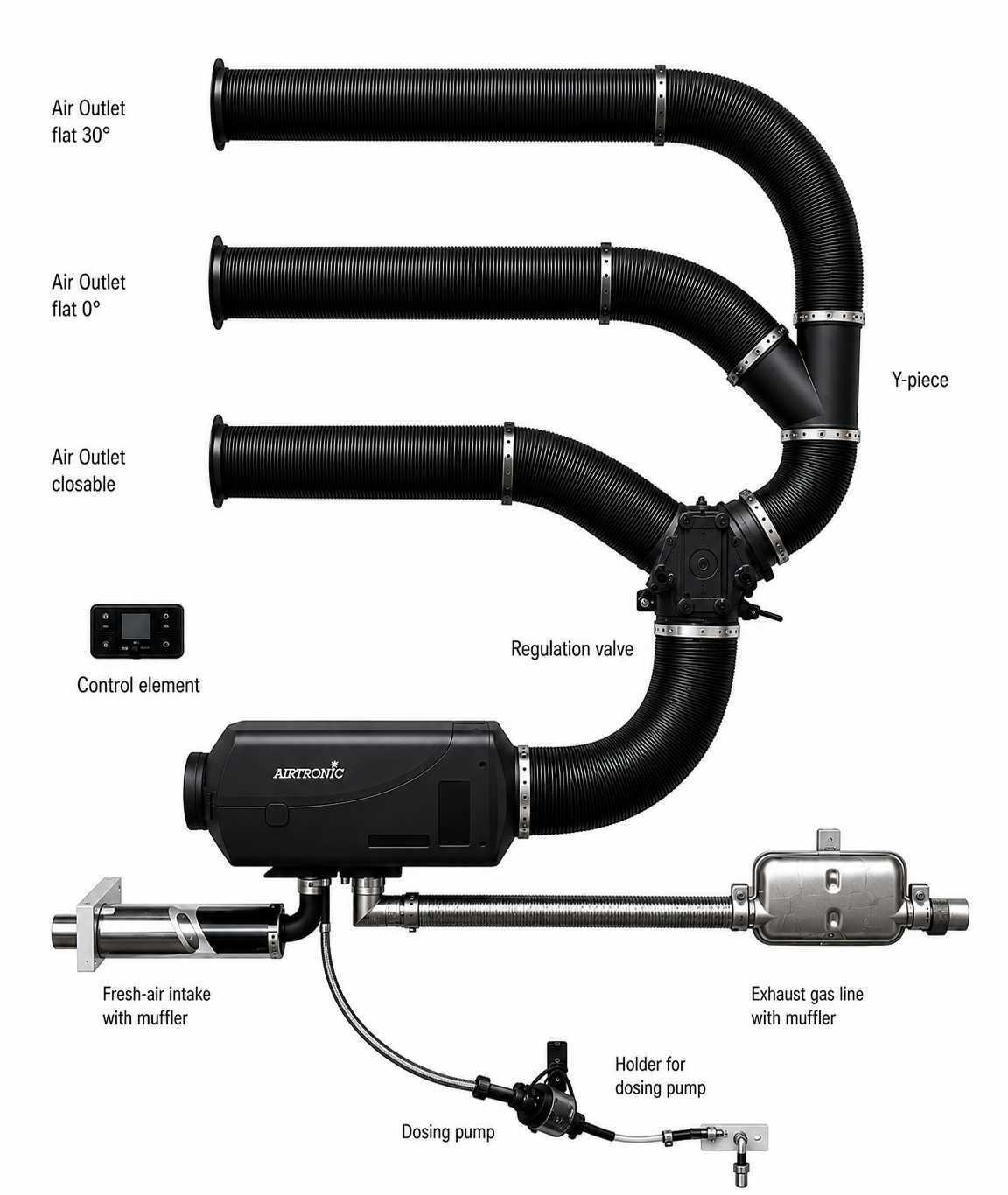
Espar D2L vs D4L: the main difference
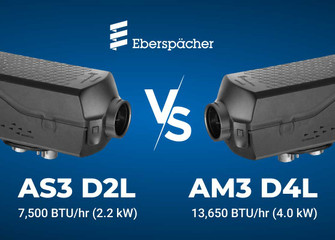
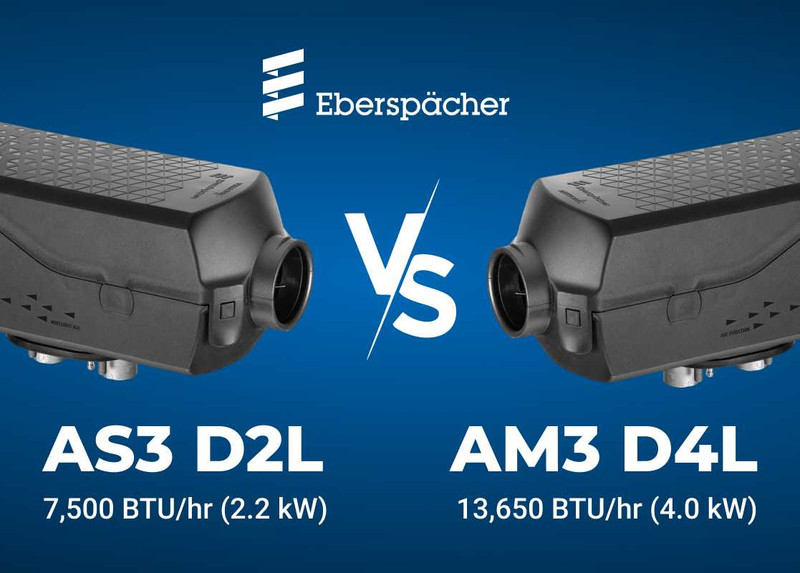
The main difference between the Espar D2L and D4L is heater output. The D2L is a 7,500 BTU/hr class diesel air heater (2.2 kW), while the D4L is a 13,650 BTU/hr class diesel air heater (4.0 kW).
For many insulated vans and truck cabs, the D2L is usually enough. For larger, colder, or poorly insulated spaces, the D4L may be the better fit.
The official Airtronic 3 documentation lists the D2L at 2,900–7,500 BTU/hr (0.85–2.2 kW), with 105 kg/h maximum hot air throughput and 0.10–0.27 L/h fuel consumption. The D4L is listed at 3,600–13,650 BTU/hr (1.05–4.0 kW), with 185 kg/h maximum hot air throughput and 0.12–0.49 L/h fuel consumption.
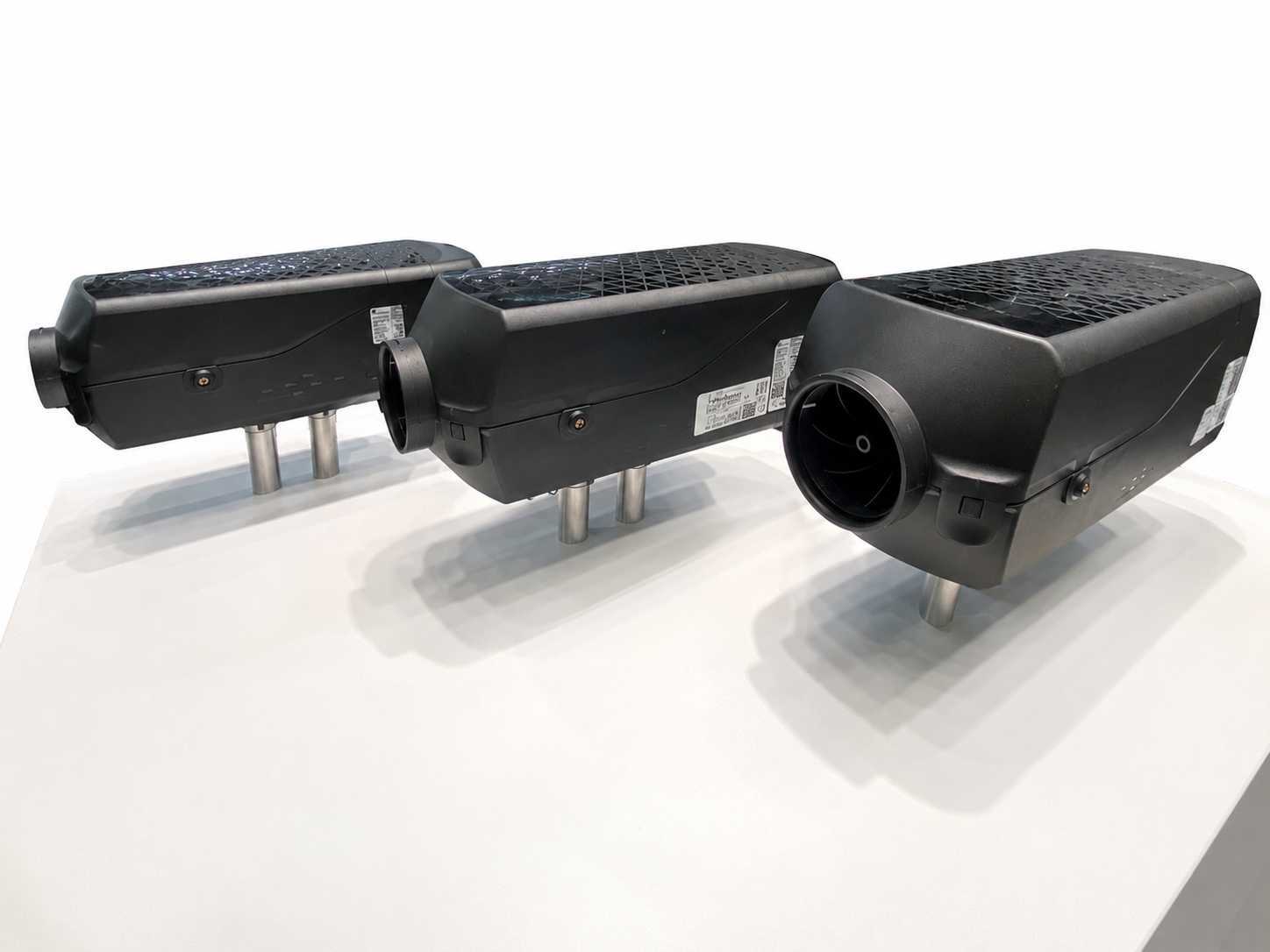
Quick answer: should you choose the Espar D2L or D4L?
Choose the Espar D2L heater if you have a well-insulated van, truck sleeper, compact work vehicle, equipment cab, or similar space. The D2L produces about 2,900–7,500 BTU/hr (0.85–2.2 kW). That output is often enough when the space holds heat well.
Choose the Espar D4L heater if the space is larger, poorly insulated, has many windows, or needs stronger heat recovery in colder conditions. The D4L produces about 3,600–13,650 BTU/hr (1.05–4.0 kW) and moves more hot air than the D2L.
What are BTUs?
BTU stands for British Thermal Unit. In the U.S., heater output is commonly compared in BTU/hr, which means how much heat the heater can produce over time.
Eberspächer / Espar documentation usually lists heater output in kW.
1 kW = about 3,412 BTU/hr
That means:
| Heater output | Approx. BTU/hr |
|---|---|
| 0.85 kW | 2,900 BTU/hr |
| 1.05 kW | 3,600 BTU/hr |
| 2.0 kW | 6,800 BTU/hr |
| 2.2 kW | 7,500 BTU/hr |
| 4.0 kW | 13,650 BTU/hr |
A 7,500 BTU/hr heater is not weak. In a well-insulated van or truck cab, it can provide plenty of usable heat. The better question is not “which heater has the most BTUs?” The better question is “which heater output matches my space?”
Diesel heater BTU sizing: why bigger is not always better
Diesel heater BTU sizing is about matching heat output to the space. A higher BTU/hr rating can help in larger or colder spaces, but too much heat output can make the heater run at low output more often.
Airtronic heaters adjust heat output automatically. During heating mode, the heater measures the room temperature or intake air temperature, then adjusts heat output, fan speed, and fuel quantity to match the heating demand.
That matters because an oversized heater may spend more time running at minimum output or cycling into pause mode. In real-world use, long low-output operation, frequent short cycling, poor fuel quality, weak power supply, incorrect ducting, or poor installation conditions can all contribute to soot buildup and performance problems.
The practical rule is simple: choose enough BTU/hr for your real conditions, but do not automatically buy the highest-output heater in your budget.
Espar D2L vs D4L technical comparison
| Model | Fuel | Heat output range | Max hot air throughput | Fuel consumption | 12 V electrical draw during operation | Best fit |
|---|---|---|---|---|---|---|
| Airtronic S3 D2L | Diesel | 2,900–7,500 BTU/hr (0.85–2.2 kW) | 105 kg/h | 0.10–0.27 L/h | 6–27 W | Vans, truck cabins, compact spaces |
| Airtronic M3 D4L | Diesel | 3,600–13,650 BTU/hr (1.05–4.0 kW) | 185 kg/h | 0.12–0.49 L/h | 6–37 W | Larger vans, weak insulation, colder use |
The D2L and D4L figures above are based on Eberspächer’s Airtronic 3 technical data for diesel heaters.
What about gasoline vehicles?
D2L and D4L are diesel models. If your vehicle runs on gasoline, use the gasoline Airtronic equivalent instead.
| Diesel Heater model | Gasoline Heater equivalent | Heat output range |
|---|---|---|
| Airtronic S3 D2L | Airtronic S3 B2L | About 3,400–6,800 BTU/hr (1.0–2.0 kW) |
| Airtronic M3 D4L | Airtronic M3 B4L | About 4,400–13,650 BTU/hr (1.3–4.0 kW) |
The official Airtronic documentation lists the B2L at 1.0–2.0 kW and the B4L at 1.3–4.0 kW.
When the Espar D2L is usually enough
For a well-insulated Mercedes-Benz Sprinter, Ford Transit, RAM ProMaster, truck cabin, compact work vehicle, or similar space, the Airtronic S3 D2L is usually enough for most normal use cases.
The D2L is the better starting point when:
- The space has decent insulation
- You are heating a van, truck cab, small equipment cab, or compact mobile interior
- You want lower fuel consumption
- You want lower electrical draw
- You do not need long or complex ducting
- You want the heater to work steadily instead of constantly cycling
This is where insulation makes a major difference. A well-insulated van holds heat longer, which helps a smaller heater perform better. Heatso’s AutoPly Insulation Kits can support vehicle-specific insulation projects before or alongside a heater install.
When to choose the Espar D4L
The Airtronic M3 D4L is the better choice when the space needs more heat than a 7,500 BTU/hr class heater can comfortably provide.
Choose the D4L if:
- The vehicle is poorly insulated
- The space has many windows
- The interior volume is larger than a standard cargo van layout
- You want faster warm-up after doors are opened
- You regularly use the vehicle in very cold conditions
- You are heating a larger mobile workspace, boat cabin, or specialty vehicle
- You need more output for a harder-to-heat application
A D4L can be a good fit for colder or less efficient builds. It should not be the automatic choice for every van, especially if the space is compact and well insulated.
Van heater size guide: when D2L or D4L makes sense
Van heater size depends on insulation, window area, interior volume, ducting, and climate. For a well-insulated Sprinter, Transit, or ProMaster, the D2L is usually the better starting point. For a poorly insulated van or larger mobile interior, the D4L may be more appropriate.
Use this practical decision guide:
| Your application | Suggested starting point |
|---|---|
| Insulated van or truck cab | D2L or B2L for gasoline |
| Compact work vehicle or equipment cab | D2L or B2L for gasoline |
| Sprinter, Transit, or ProMaster with insulation | D2L or B2L for gasoline |
| Larger mobile workspace or boat cabin | D4L |
| Extreme cold use | D2L / B2L with good insulation or D4L |
| Long ducting or multi-outlet layout | D4R |
Use BTU/hr as a comparison tool, then check the real application:
- Interior size
- Insulation level
- Window area
- Climate and expected low temperatures
- Ducting length and number of outlets
Supporting note: where the Espar D4R fits
Some customers ask about the Airtronic M3 D4R when comparing D2L and D4L. The D4R is not the main focus of this article, but it is useful to understand where it fits.
The D4R is also a 13,650 BTU/hr class heater (4.0 kW). Like the D4L, it has a maximum heat output of about 13,650 BTU/hr (4.0 kW) and a minimum heat output of about 3,600 BTU/hr (1.05 kW). The key difference is airflow: the D4R is designed for higher air throughput.
That makes the D4R more relevant for larger spaces, longer ducting layouts, or marine-style installations where airflow through the ducting system matters. For a typical insulated van, the D2L or D4L will usually be the more relevant comparison.
Recommended Espar kits by vehicle and fuel type
Use the kit that matches your vehicle fuel type. Do not install a gasoline heater on a diesel fuel system or a diesel heater on a gasoline fuel system.
Diesel 7,500 BTU/hr class options
- D2L diesel Sprinter kit, 7,500 BTU/hr class (2.2 kW)
- D2L diesel universal kit, 7,500 BTU/hr class (2.2 kW)
Gasoline 6,800 BTU/hr class options
- B2L gasoline Sprinter kit, 6,800 BTU/hr class (2.0 kW)
- B2L gasoline Ford Transit kit, 6,800 BTU/hr class (2.0 kW)
- B2L gasoline RAM ProMaster kit, 6,800 BTU/hr class (2.0 kW)
- B2L gasoline universal kit, 6,800 BTU/hr class (2.0 kW)
Diesel 13,650 BTU/hr class options
- D4L diesel universal kit, 13,650 BTU/hr class (4.0 kW)
- D4L diesel marine kit, 13,650 BTU/hr class (4.0 kW)
Gasoline 13,650 BTU/hr class options
Insulation support
Final checklist before choosing
Before choosing between D2L and D4L, ask:
- Is the vehicle diesel or gasoline?
- How well is the space insulated?
- Is this a compact cab, standard van, extended van, boat, or larger specialty vehicle?
- Will the heater be used overnight, occasionally, or every day?
- Will it be used in mild winter, freezing temperatures, or extreme cold?
- Do you need a simple single-outlet setup or longer ducting with multiple outlets?
- Is saving power and fuel more important than maximum warm-up speed?
For most insulated vans and truck cabins, the D2L is the right place to start. For weak insulation, larger interiors, or colder operating conditions, the D4L is worth considering. For longer ducting or larger marine-style air distribution, the D4R may be the better match.
FAQs
Is the Espar D2L enough for a Sprinter, Transit, or ProMaster?
In absolute majority cases - yes. The Espar D2L is usually enough for normal heating needs in a Sprinter, Transit, or ProMaster. If you have a larger RV, the D4L may be a better fit.
Is the D4L always better than the D2L?
No. The D4L produces more BTU/hr, but that does not automatically make it better. The right heater is the one that matches the space and can run in a healthy operating range.
What is the gasoline version of the D2L?
The gasoline equivalent to the D2L is the Airtronic S3 B2L. It is a 6,800 BTU/hr class heater (2.0 kW), while the D2L is a diesel 7,500 BTU/hr class heater (2.2 kW).
What is the gasoline version of the D4L?
The gasoline equivalent to the D4L is the Airtronic M3 B4L. It is a 13,650 BTU/hr class heater (4.0 kW) for gasoline-powered applications that need more output than the B2L.
When should I choose the D4L instead of the D2L?
Choose the D4L if your vehicle is poorly insulated, has many windows, has a larger interior volume, or will be used regularly in very cold conditions.
Where does the 13,650 BTU/hr class D4R fit?
The Eberspacher D4R is a supporting option for larger spaces, longer ducting, and marine-style layouts. It is not usually the default choice for a well-insulated van.
What size diesel heater do I need for a van?
For many well-insulated vans, a 7,500 BTU/hr class heater like the D2L is a strong starting point. If the van is poorly insulated, has many windows, has a larger interior, or will be used in very cold weather, a 13,650 BTU/hr class heater like the D4L may be a better choice.
Conclusion
When comparing Espar D2L vs D4L, do not choose by BTU/hr alone. The right Espar D2L heater or Espar D4L heater depends on your insulation, vehicle size, fuel type, ducting layout, and expected winter use.
For most well-insulated vans and truck cabins, the Espar Airtronic S3 D2L is usually the right choice. For larger, colder, or poorly insulated spaces, the Espar Airtronic M3 D4L may be the better fit. If your layout involves longer ducting or marine-style air distribution, the D4R may be worth considering as a supporting option.
A properly sized heater can help improve comfort, reduce wasted fuel and power, and keep the heater operating in a healthier range.
Not sure whether your build needs the D2L or D4L? Contact Heatso with your vehicle, fuel type, insulation level, ducting plan, and expected winter use. We’ll help you choose the right Espar kit before you buy.